Friday, 18 September 2015

Creative textile activities


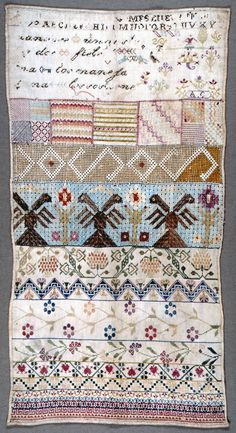
I have to say Jane Austin is one of my favourite writers and Hollywood as her movie maker. I love Pride & Prejudice and Sense & Sensibility but there is more to education than sewing the sampler that is the Certificate of your education and hall pass to marriage back then.


Besides sewing garments, Home Economics provides a great forum for textile education. The options are nearly unlimited if you dare to spend time experimenting with "textiles".

Textile arts are arts and crafts that use plant, animal, or synthetic fibers to construct practical or decorative objects. Here are a few fun projects for home or school. The tab at the top of this blog has a few more with clips on how to do them.

FUN PROJECTS

  • Freehand stitching with fabrics, felt, threads by both hand and machine. Choose a theme, create a "painting" from what you see or your favourite photo and make a quilt or hanging. Recycled fabrics/clothing or memento's from your past makes it both more eco-friendly and cheaper on your budget as a "conscious shopper" it will be more meaningful as a work of art.
  • Make a game from left over pieces of fabric, beads & buttons. 
  • Gift cards or books made with left over textile scraps. They could be made in conjunction with mentoring student in the junior school.
(www.clearvisionproject.org.au)


  • Graffiti art in quilting/silk scarves, jeans/lamp shade, beach towel


  • Upcycle some clothing to make new clothing or something completely different    


(www.upcyclingclothing.com)

 DESIGN CHALLENGES:

  • Make a class theatre or play and incorporate elements across the curriculum or in high school, across learning domains. Here is a website for a production of Go Pinocchio. To inspire a senior textile class, perhaps they could make some costumes for a school theatre??  http://www.theatreofimage.com.au/docs/TextileStudentActivities.pdf
  • Wearble art project. This is a great project to consider the design aspects of something and how to create it in textiles.

  • School competitions like Wool4Schools (http://www.wool4school.com/) where students present design ideas on a moodboard to the actual production of a garment made from Merino wool. Prizes include an internship and photo shoot with girlfriend magazine.

COMMUNITY TEXTILE PROJECTS


  • Link with a local community group eg craft group of older folk and pass skills from the older generation to the younger. Skills like crochet, embroidery, felting, Of course Bluecard requirements may need to be considered. This could also be multi cultural group within the local community. Each community is different so you would need to contact your local community craft or church groups that support mission
  • I mention this as it can sometimes put a focus to the creative task and is a project FOR someone. Our young people are often very generous and enthusiastic witht hese type of activities.


(www.cmap.org.uk - community textiles project in Brazil)


This blog is sew easy peasy because one of my passions is for sewing and creating with textiles to be accessible to all. It's helpful to have a range of stimulating textile examples of varying skill to help inspire minds to think of options.
I have found it useful to have my own work books or folders of information handy with a variety of  resources so students have opportunity to do some independent learning and experimenting.
I have pintrest boards around different themes, skills, ideas so I can inspire my own mind with ideas to bring into the classroom.


Thursday, 17 September 2015

Sustainable fashion


What is 'traceability'?   
Traceability is the ability to verify the history, location, or application of an item by means of documented recorded identification.

In an era of eco consciousness, this idea has importance for all we do. Not just in terms of eg what we eat and where it comes from but the ethical care of the animals from where we purchase or meats. In terms of fashion, we are becoming a more conscious society about:


  • The fabrics of our clothing
  • where they originated? Grown and/or manufactured in australia?
  • How they were grown
  • How have they been manufactured
  • what chemicals are used in their production.
  • Are they organic?
  • who has been involved in their production
  • What are the working conditions of the people who have manufactured the product
  • What are the profits and what are the profits supporting
These are just a few of the questions to engage with the questions of sustainability as they all deal with sustainability long term of our planet, ethics of manufacture and purchase and responsibility to our planet, workers and buyers. There is no quick answer for any of these questions but great starting points for our own understanding to become more ethical conscious consumers.

What did our actions support today?


Traceability in action is knowing about the process of production from growing the fibers to final production: check out this website to find out more about traceability with rapaui clothing.

"We are not a company that tries to argue for right or wrong. Our duty is to make it easier for people to find out where clothing comes from, how it is made and who made it".


In Australia, the 2015 Fashion Report found most companies did not know where most of their cotton came from. H & M and Indetex were the two biggest fashion retailers that rated the best amongst international brands for policies, chain traceability and workers rights. This week (September 2015) H & M launched their brand new denim collection made from textiles from the Garment Collecting Initiative. This fashion brand collected shoppers denim and they were rewarded with a discount off their purchase) which then recycled at least 20% of the cotton by the brand.


(http://fashionista.com/2014/01/hm-launches-denim-line-made-from-used-clothing)


Fashion labels considering ethics/sustainability and responsible production


Based in Melbourne, Victoria, it is a creative space and community hub dedicated to creating training and employment opportunities in fashion for talented young people from refugee backgrounds. All their garments are ethically made using only reclaimed and up-cycled materials gathered from the local fashion industry, and they are certified by Ethical Clothing Australia.

What you're paying for - Sustainable and ethical casual/dressy wear, made in Australia from recycled materials. ($-$)Fashion


2. Bhalo


An Australian ethical fashion label produced in rural Bangladesh. Designs limited edition women's clothing and accessories, made from ethically hand woven and hand embroidered cotton fabrics. Bhalo (the Bengali word for 'good') is primarily focused on honourable working conditions and community development, working only with fair trade producers in rural communities.
What you're paying for - ethical fashion made by hand using a number of 'slow' production techniques like hand-loomed cotton fabrics which have almost zero CO2 footprint. ($-$)


Have created a completely handmade-in-Australia collection, titled 'The Collector's Collection', which utilises the label's vast archive of vintage fabrics from the 1980s.
What you're paying for -
'The collector's collection' is made in Australia, using unique vintage printed fabrics rather than from new materials. ($)


So how can you tell??

Part of responsible consumerism is informed decision making - the skills education is trying to embed in the next generation. Informed means , we have a responsibility to research the information and weigh it up. 
Reflecting on sustainable fashion - where does ETSY sit with ethics and responsibility?
http://www.thestar.com/business/2015/03/10/the-ethics-of-etsy.html

(http://ohmyhandmade.com/2013/heart/the-future-of-handmade-is-in-our-hands/)

A twist on fashion of the future:

Susanne Lee Director of Modern Meadow Inc and author of Fashioning The Future: tomorrow’s wardrobe. ( https://www.nextnature.net/2015/06/interview-suzanne-lee/)

Wednesday, 16 September 2015

Sustainability


As I flew back home by plane one day in September 2014, I read an article in the Qantas magazine "Fast and fair?" questioning if fast fashion retailers can be sustainable, ethical and responsible.
H& M which is the world's second largest clothing retailer was on the journey to do just that. With 3300 stores in 54 countries, it had recently launched H & M Conscious Collection and some ethical initiatives to use more sustainable materials to improve the conditions of the people who make their clothes. They started this initiative in 2005.
I checked their website again. This is what they had to say about their sustainable practices today in 2015.
We want to make conscious choices in fashion desirable and easily accessible for as many people as possible. The right choice should be an easy and attractive one. Piece by piece this will reduce the impacts that fashion has on the planet.
Our aim is for all cotton in our range to come from more sustainable sources by 2020.


In general their strategies were for organic cotton, wool, linen, hemp, silk, leather, natural rubber, recycled polyester and polyamide, recycled plastic and the use of lyocell. I had to look this one up. In short it is made from trees and more sustainable than cotton. From it they produce:
TENCEL® which is a soft, lightweight form of lyocell that’s made from FSC™-certified eucalyptus. The process for turning the trees’ fibres into fabric is kind to the environment, and makes something that’s perfect for jersey, knits and woven fashion garments.
MONOCEL® which is the same as TENCEL®, except that it’s made from FSC™-certified bamboo.


So the top key words here were SUSTAINABLE, ETHICAL and RESPONSIBLE.
So what does that mean for a new generation of learners in education. What can we learn from industry to apply to our own experience of creating textiles as well as being responsible, sustainable and ethical consumers.
Firstly, the Australian Curriculum addresses the issue of sustainability that is embedded in the curriculum.

Sustainability addresses the ongoing capacity of Earth to maintain all life.

Sustainable patterns of living meet the needs of the present without compromising the ability of future generations to meet their needs. Actions to improve sustainability are both individual and collective endeavours shared across local and global communities. They necessitate a renewed and balanced approach to the way humans interact with each other and the environment.
Education for sustainability develops the knowledge, skills, values and world views necessary for people to act in ways that contribute to more sustainable patterns of living. It enables individuals and communities to reflect on ways of interpreting and engaging with the world.  Sustainability education is futures-oriented, focusing on protecting environments and creating a more ecologically and socially just world through informed action. Actions that support more sustainable patterns of living require consideration of environmental, social, cultural and economic systems and their interdependence.

For LEARNERS:
  • Act - with knowledge about what is a sustainable for living and allow for the ongoing capacity of the Earth to maintain all life
  • Act - with skills to put this knowledge into practical action. Do without compromise and consistently
  • Act - with values that are supported by the community of the world as we work together
  • Reflect - on the knowledge & skills as we engage and interpret sustainability for the world
  • Interpret & Engage a big picture understanding of environmental, social, cultural and economic systems both locally and globally
For EDUCATORS:
  • Critical enquiry learning opportunities for students to develop the knowledge of what constitutes sustainable living. This would consider cultural difference, particularly in Australia with indigenous and non indigenous ideas of different systems and their interdependence. eg Looking at sustainable practices in different communities, linking across the curriculum, researching textile developments and sustainable practices
  • Developing reflective practices in students which would support learning across the curriculum and in their personal domain. eg drawing knowledge from ethical and fair trade companies
  • Using sustainable practices within the classroom and learning environment
  • Project work within the school to engage others in learning about sustainable practices

Interesting websites on sustainability for schools

Seed to table (ideas for food technology in Home Economics)
Learning & Teaching Sustainability: http://sustainability.edu.au/

Education for Sustainability: website which lists more websites on sustainability for research and activities to develop "knowledge" about sustainability.     http://www.educationforsustainability.com.au/resources/useful-websites


Tuesday, 15 September 2015

Teaching in a textile environment

Classroom Environment

I love Pintrest. It's like the one-stop-shop of ideas. Every year, I think how to rearrange that "physical" space to cater for the new class. If you are lucky enough to be teaching the same subject, you have a chance to build your resources. In special education, I am ALWAYS making new ones as the differentiation in teaching is so diverse every year. As I consider the Home Ec or Textiles environment I think of the  elements  that helps inspire creativity.


Cognitive psychologists discovered different design principles to enhance memory performance and in that way remembering the information. The retrieving process depends on many variables and one of them is colour. Colour is the most powerful stimulus for the brain. It opens up other areas of the brain and allows greater and easier learning and remembering.

Information enters our brain through eyes and ears and it is stored in the so called sensory memory. But we can pay attention only to a small amount of information. Once something has attracted our attention, it moves into our working memory. The brain notices and remembers colour first.

Jana Jan (2014) How Colours can enhance memory performance viewed on https://blog.edynco.com/instructional-design/how-colors-can-enhance-memory-performance/


Researchers and experts have made a few important discoveries and observations about the psychology of colour and the effect it has on moods, feelings, and behaviours.


This seems relevant considering the information I have been reading on adolescent learners. They need extra visuals to help focus their attention, consolidate knowledge and help them with their "frontal lobe" issues related to their emotions. From the research on colour psychology there are implication in the classroom for:

1.The physical learning environment 

2. Our "emotional" connections when immersed in an environment with colour

3. The way information is presented both in paper copy and with Web tools

4. Finally some learning about colours that suit each one of us when it comes to designing   
    textiles that we may wear.

So Which colours?

Like all things, colouring is about balance. While one attribute may be positive, it seems too much of it becomes counter-productive.

Cool Colours - Blue, green & purple. Most often used for painting walls

Blue - Intelligence but negatively creates coldness

Green – Balance & Harmony. It is good for reading comprehension (green clear sheet) improves reading. It is easiest on the eyes.
Violet - spirituality and luxury.
Green, blue, violet – in advertising can often evoke indifference
Warm colours create calm – red, yellow, orange
Red - shows strength and is the colour most preferred for advertising and marketing. It can negativity signal aggression
Yellow - Exudes friendliness and taps the emotions.Too much yellow fatigues the eyes but generally enhances concentration. Black words on a yellow background is the preferred arrangement for students with visual impairments
Orange - warmth & passion.
Pink – femininity and calm but over time can create agitation

Black - sophistication and glamour

Layered colours – create tranquillity

Application of Colour

It seems colour psychology is used mainly in colour therapy, design and marketing but according to Sylivia O'Brien (www.colourtheory.net) there are colours that are best suited for learning in education. She notes,
"when dealing with colour in any environment we are always creating an atmosphere. The challenge of developing a unique & functioning palette for an educational application is a wonderful opportunity to develop something meaningful".

The blue colour family works well in science & math based classrooms by lowering the heart rate & allowing concentration to kick in.
The natural colour of balance, greens are great for counseling, libraries, history & social studies spaces. The calm of blue and creativity of yellow collide in the multi-tasking green family of colour.
Gentle energy yellows are great for classrooms dealing with languages & other creative pursuits...fine art, dance, culinary arts

Oranges & peach tones support athletic facilities, drama, media centres & cafeteria settings. Warning: too much can overstimulate so best to balance out with a complimentary cool tone
School entrances & hallways are a great platform to show school colours (community) & use stronger colours to uplift the energy in the walk between classes, balanced out with neutrals.


Application for eLearning includes:
  • Use colour schemes that use three tones
  • use complimentary colours to highlight critical information (eg purple/yellow are opposites on the colour wheel)
  • Use monochromatic colours to group similar facts or when using a learning map for each group of concepts along the branch of similar facts
  • Saturated colours are kinder on the eyes than hues


1. http://info.shiftelearning.com/blog/bid/348188/6-Ways-Color-Psychology-Can-Be-Used-to-Design-Effective-eLearning
2. http://www.silk-flower-smart.com/floral-arrangement-tips.html


Interesting websites for further reading

Sylivis O'Brien (www.colourtheory.net) has information on implications for education.


Colour Psychology:   

http://www.colour-affects.co.uk/psychological-properties-of-colours has information about the effect of colours

COLOUR OBJECTS (2015) Psychology of Colour in the Educational Environment  viewed on http://www.colorobjects.com/en/color-columns/the-colour-real/item/357-psychology-of-colour-in-the-educational-environment.html


Pulling it altogether

I'm sure there is no one perfect classroom or learning environment. With pedagogy considered, creative tools for inspiration (posters/activities, visual stimuli) and some ideas about "creating a learning atmosphere" that considers colour,  the remaining elements of the ideal classroom will be the dynamic interactions that happen between students and the learning resources.

My classroom has order and everything has a place. I have a place for those "random acts of learning" resources that we have lying around or think may come in handy one day. Students have their place for equipment and books and an allocated and labelled place for our shared resources. There is the place for our "manipulative" resources and a place where there are resources for extension or independent learning time.
Working with teenagers, I have a place that looks like it is for teenagers and is contextual to the learners. We work on this space together.

I suppose the last comment to make is that place in the classroom that is not assessable and is the place we can put our creations/comments/ideas. It is a place that allows communication to happen between those in the classroom. It is a shared space and may have our "corporate" learning which may be a piece of work or collection of works that makes up the "us" of the class community.


Monday, 14 September 2015

Teaching environment

All five members of our household are studying at the moment so it makes for an interesting environment.
I can't think in mess and need to create order in my physical work space so I can start planning the new terms curriculum or work on my assignments.
One of the members of our house has an office desk I can't usually see for the books/papers but he knows exactly where everything is and even knows if something is missing!!
Another member sits outside to study and gain energy and inspiration from the bush surrounding our house.
We all learn differently and gain inspiration in different ways. The same is true for my class and all the learners I have come to journey with over the years. With each different teaching subject, I have had to create an new learning space. Some characteristics are the same and some are vastly different.


(http://www.dreamstime.com/royalty-free-stock-photos-creative-mind-concept-colorful-effect-image39410568)


Teaching Pedagogy

I have already shared a little on this in an earlier blog (Educate & Advocate). In general most of the elements of this do not change. It is an ongoing process of establishing rules/routines, strategies for teaching content, getting to know the students and reflecting on data to improve learning gaps. Ultimately it is also reflecting on my own teaching with perhaps some wise observation by colleagues to try and provide the best quality teaching I have to offer. Of course embedded in all this is my own professional development to identify gaps in my knowledge that I want to improve.

With the transition of year 7 to high school in QLD has been much research and support for middle school teachers. I personally have found this very insightful and practical especially when it comes to teaching boys. While there may not be many boys in Home Ec perse, most teachers will be teaching boys at some stage and definitely teaching adolescents in high school.


(www.andrewfuller.com.au) 

I found work by Andrew Fuller to be really helpful and if you ever have opportunity to attend a workshop, he is really great. So the pearls of wisdom I have gained in this are about my classroom include:


1. Adolescent brains are under re-construction with "synaptic pruning" and the frontal lobes. As Fuller comments "adolescent brains take year 9 off. In most organisations, we are entitled to long service leave after 10 years of service and year nine students have also been there ten years".
        Synaptic pruning means the experiences we give our young people at this time are really important. Risk taking and experiential learning helps to re-connect this part of the brain.
The frontal lobe is the part  of the brain that helps us plan, consider, control impulses, make wise judgements and be kind, considerate people. In short it is the part that allows us to be civilised and human. If it is "missing in action" for high school, then teachers are likely (and do) have emotional, fired up young people, acting on emotions and ill-controlled impulses. SOUND FAMILIAR???

Boys in Education (http://www.ascd.org/ascd-express/vol6/604-gurian.aspx)

2. Boys are generally visual so need extra intentional visuals to help with their learning.

3. Project-based kinaesthetic learning - so lots of hands-on and action learning

4. Movement around the classroom - for both staff and students

5. Teaching considering learning styles

6. Skills training on how to do things then critical enquiry approaches to demand problem solving solutions (help synapses reconnect)


So what does that mean for the learning environment??

Most of what I have explored has been centred around pedagogy and perhaps a few routine organisational aspects to planning in the classroom. What is also important is the physical learning environment. Sometimes as teachers we don't have a lot of say in what we can do with this element but none-the-less there is plenty of research that indicates it has as much to do about learning as the content.

I will explore this in my next blog

Saturday, 12 September 2015

Pintrest and Polyvore


Pinterest is a visual discovery tool that you can use to find ideas for all your projects and interests.
Set up a username and password with an email. There is no cost. Once this is set up, create boards of interest and follow boards of interest. You can create boards around themes you like to help you on your journey of creative thinking and designing in these areas.


This page is from Pintrest and is actually designs around the latest pantone colours. You can follow boards that you like for even more inspiring ideas!!


Polyvore is a community powered social commerce website. Members curate products into a shared product index and use them to create image collages called "Sets".

www.polyvore.com

Polyvore is great for bringing ideas together around a theme. My daughter wanted to shop for the autumn. We made up boards of clothes she could wear for inspiration before shopping!


In my latest textile project around hippie inspired clothing, I created boards for inspiration.

Polyvore is not just for clothing. It incorporates many items including household items as well.


Thursday, 10 September 2015

What's the latest colours?


Pantone Inc. is a corporation headquartered in Carlstadt, New Jersey. The company is best known for its Pantone Matching System (PMS), a proprietary colour space used in a variety of industries, primarily printing, though sometimes in the manufacture of coloured paint, fabric, and plastics. (http//au.pantone.com) 

These are the colours that will end up in the latest fashion, colours in shoes, wallpaper, paints and the like. They are forecast ahead so the summer colours you see in the fashion magazines are the ones we will see in our next summer for example.
Creative design incorporating these colours will cater for the latest trends. The latest colours are accessible and will be evident in the new lines of clothing/home feature/ paints.

However, your own creativity is important too. Choosing your own colours makes your designing unique.
For choosing your own colours, become familiar with the colour wheel and how colours work. Then you have an infinite palette but one that compliments to enhance your designs. Remember, incorporating the principles of design (using the elements of design) is what brings your creative design together.


http://www.darlingdoodlesdesign.com/wp-content/uploads/2013/02/Standard-Color-Wheel-1024x791.jpg


Check out this Youtube clip    http://scottnaismith.com/the-colour-wheel/ . It's interesting to consider why do our printers use "magenta", "cyan" and "yellow" as the colours used to mix all the other colours in our printing when we usually think of red, blue and yellow as our primary colours!!

Try painting your own colour wheel with just the primary colours. Here is another youtube clip on how to do that by Scott Naismith.


https://www.youtube.com/watch?v=J6ZAsuiHvTo